Saturday, 6 October 2012

Eggs

Any way you crack them, all eggs contain a yellow yolk surrounded by a clear egg white (also known as albumin), all encased in a shell. Chicken
eggs are the most widely consumed type of egg but other kinds such as duck, quail, and turkey are also eaten throughout the world.
When it comes to chicken eggs, there are basically two kinds to choose from: white and brown. White eggs come from hens with white feathers
and white earlobes whereas brown eggs come from hens with red feathers and red earlobes. White and brown eggs have the same nutritional
quality; notwithstanding many claims to the contrary, neither is better than the other. Fresh eggs are graded and sized by the United States
Department of Agriculture (USDA). AA is the highest grade, followed by A and B. Size ranges from jumbo to extra large, large, medium, small, and
peewee.
What came first? We may never know, but what is for sure is that eggs have been around a long, long time. Throughout history, the egg has been
used to symbolize everything from fertility to nobility. Domesticated chickens can be traced back to 3200 B.C. in India. Full-blown egg production in
the Middle East and Asia began as early as 3,500 years ago. Eggs were brought to the Western world in the fifth century A.D. Several hundred
years later eggs were added to the list of foods not eaten during Lent because they were seen as luxurious. On Easter, people were allowed to
begin eating eggs again, which explains their importance and popularity on that holiday.

Where Do Eggs Come From?

As with so many food essentials, China is the world’s largest producer of eggs, meeting its own needs and also supplying eggs to some
neighboring markets. Other big suppliers are India, Mexico, the European Union, and the United States. Iowa, Ohio, Indiana, Pennsylvania,
California, and Texas are, in that order, the United States’ leading producers.

Why Should I Eat Eggs?

The quality of egg protein is the highest of any whole food product, second only to human breast milk. Eggs are also a good source of the amino
acid tryptophan, selenium, vitamin B2, and vitamin B12, and are one of the rare sources of natural vitamin D. Eggs are a good source of choline,
which is important for brain function, gene regulation, and heart health. Eggs also contain lutein and zeaxanthin, two phytochemicals that may
reduce the risk of cataracts and macular degeneration.

Home Remedies

Eggs have been used in a variety of ways for medicinal purposes. One popular remedy for colic consists of beating four to five egg whites and
putting them on a piece of leather, sprinkling the mixture with pepper and ginger, and then placing the mixture over the child’s belly button. The ageold
remedy of mixing one egg, a teaspoon of Worcestershire sauce, a dash of vinegar, a dash of Tabasco sauce, and a little salt and pepper
reportedly has helped many in getting over a hangover. Be aware that from a food-safety standpoint, eating raw eggs is not a good idea!

Lifesaver!

CATARACTS AND MACULAR DEGENERATION: According to one study, people who ate foods high in lutein and zeaxanthin, such as eggs,

had a twenty percent reduction in developing cataracts and a forty percent reduction in developing macular degeneration.

OBESITY: A report in the Journal of the American College of Nutrition presented promising research on the possible “hunger-fighting power” of

eggs. An egg first thing in the morning may lead to reduced calorie consumption for the rest of the day.

Tips on Eggs

SELECTION AND STORAGE:

• Check for cracks before purchasing.
• Look for an expiration date on the side of the carton and only buy eggs that are refrigerated.
• There are varieties of eggs that are rich in omega-3 fats and are actually lower in cholesterol than regular eggs (180mg versus 215mg in a
large egg).
• Store your eggs in the refrigerator and they will stay good for about one month.
• Do not put them in the refrigerator door as they will be exposed to warmer temperatures when the door is opened. Keep them in their original
carton.
• Egg whites freeze fairly well for several months.

PREPARATION AND SERVING SUGGESTIONS:

• Wash your hands, utensils, and work surfaces with hot, soapy water before and after handling eggs to prevent cross-contamination of
salmonella.
• Cook until yolks are firm.
• Don’t keep eggs and egg products out of the refrigerator for more than two hours.
• Eggs are used in French toast, pancakes, quiche, soufflés, salads, and a variety of other dishes.

Eggplant

Eggplant, along with potatoes, tomatoes, and peppers, is a member of the nightshade family. Eggplant hangs from vines on a plant very much like
tomatoes and comes in several widely available varieties such as classic (oval shape with purple color), Italian (small and mauve with white
streaks), Japanese (white with purple streaks), pink, and green. Eggplant can be egg-shaped, oval-shaped, or balloon-shaped with a pear-shaped
end, and has a somewhat bitter taste and spongy texture.
Eggplant is thought to have originated in southeast India around Assam and the adjoining area then known as Burma. From Southeast Asia it was
brought by traders from the Middle East to the Mediterranean in the early Middle Ages. The Moors introduced eggplant to Spain in the twelfth
century and it soon made its way throughout the rest of Europe. Four hundred years later, Spanish traders brought it to the Americas.
It was not until fifty years ago that eggplant was even considered acceptable to eat in the United States because many believed eating it caused
insanity, leprosy, and cancer.

Where Is Eggplant Grown?

Most of the world’s eggplant is grown in China. Italy, Turkey, Egypt, and Japan also produce significant harvests of the vegetable. Florida is the
largest U.S. producer of eggplant, accounting for more than thirty percent of the crop. New Jersey is the second largest, followed by California.
Mexico exports eggplant to the U.S. during the winter.

Why Should I Eat Eggplant?

Eggplant is high in potassium, copper, folate, magnesium, and fiber. It contains flavonoids and phenols such as caffeic acid and chlorogenic acid,
which may fight cancer, viruses, and harmful bacteria, and protect against damage to cells.

Home Remedies

In Asia, the roots are often used for coughs, phlegm, and sore throats. It is believed that crushing a baked, blackened eggplant and applying it to
teeth and gums will promote a healthy mouth. This concoction is also said to stop bleeding gums and nosebleeds. Eggplant has been used as an
antidote for poisonous mushrooms, to reduce hemorrhoids, soothe burns, and relieve cold sores.

Lifesaver!

HEART HEALTH: An animal study in Japan found that an anthocyanin unique to eggplant peels had anti–heart disease attributes. Rabbits with

high cholesterol that were fed eggplant had decreased weight, total cholesterol, LDL cholesterol, and triglycerides.

DETOXIFIER: A cell study found that eggplant triggered enzymes that detoxify and remove drugs and other harmful chemical substances in the

human body.

LIVER CANCER: A cell study found that a component of eggplant called glycoalkaloids killed human liver cancer cells.

 Tips for Using Eggplant

SELECTION AND STORAGE:

• Look for firm, shiny, smooth, deep purple skin. Avoid eggplant with cracked or shriveled skin, and stay away from brown, blue, or yellow
eggplants.
• Eggplant is best used right away, but may be kept in the refrigerator’s crisper drawer for up to one week.

PREPARATION AND SERVING SUGGESTIONS:

• The skin can be peeled with a potato peeler or it may be kept on.
• To tenderize the eggplant and remove some of the bitter flavor, sprinkle the eggplant with salt, let it sit for 30 minutes, and then wash the salt off.
• Eggplant can be baked, roasted, steamed, fried, or sautéed. The eggplant is done when a fork goes through easily.
• Scrape out some of the middle of the eggplant and stuff it with vegetables and cheese, then bake.
• Add eggplant to stir-fry, lasagna, or other pasta dishes.
• Puree eggplant with lemon juice, garlic, and olive oil for a bread spread or vegetable dip.

Currants

Currants are related to gooseberries and are not smaller versions of raisins. The English word “currant” has been used for this fruit only since 1550,
taken from the fruit’s resemblance to the dried currants of Greece, which, in fact, are raisins made from a small seedless grape. The main varieties
available are: red, black, white, green, and pink. Red and black are the most common type and are used for culinary purposes. White currants are
an albino form of the red, and pink currants are a mix between the white and red.
Currants are native to Europe, Asia, and North America. Cultivation began in Europe in the 1500s and the first American colonists began
cultivating them in the late 1700s. The black currant has been known in the United States as a “forbidden fruit” since 1911, when a ban was placed
on the fruit because it caused disease to the white pine tree. Although the ban was lifted in 1966, several states still prohibit growing black currants.

Where Are Currants Grown?

Russia is the number one producer of currants. Poland, Germany, Ukraine, and Austria also grow currants commercially. There is very little
commercial production in the United States; however, Oregon, Washington, and New York grow them at modest levels.

Why Should I Eat Currants?

Currants are an excellent source of vitamin C and fiber, and a good source of calcium, iron, potassium, and vitamins A and B. Currants are rich in
the phytochemical ellagic acid, a phenolic compound that may reduce some cancers and cholesterol, and anthocyanins, which have shown antiinflammatory
and antioxidant properties.

Home Remedies

BLACK CURRANTS: Boiled black currant juice has been used for sore throats. The leaves have been used to reduce fevers and increase

urination. Extract from the bark of the black currant tree has been used for hemorrhoids. Black currant jelly mixed with hot water has been helpful for
colds.

RED CURRANTS: The leaves have been used to relieve pain from arthritic symptoms, sprains, and dislocated bones. The fruit has been used

as a laxative. It has also been used to prevent scurvy. Red currants have also been made into facial masks for firm skin.

Lifesaver!

CANCER: One study found that black currant juice stopped the growth of tumors in mice.

BLOOD PRESSURE: Currant seed oil was given to a group with mildly high blood pressure. Scientists attribute their significant decline in blood

pressure to the gamma-linoleic acid found in the berry.

Tips on Using Currants

SELECTION AND STORAGE:

• Currants come fresh, dried, juiced, and in jams and jellies.
• Choose berries with the darkest colors. Currants can also be bought frozen.
• Keep currants refrigerated and use them within two days. Wash just before use. Fresh currants can be frozen.

PREPARATION AND SERVING SUGGESTIONS:

• Wash the berries in cold running water. Remove stems or leaves. Drain and pat dry.
• Use currants as a garnish for any dish.
• Add dried currants to brown rice.
• Top ice cream with fresh currants or a currant sauce.

Cumin

Cumin is related to coriander and is a member of the parsley family. Some countries consider caraway to be a foreign form of cumin and vice
versa. That is why you may see cumin referred to as Roman caraway, Eastern caraway, Egyptian caraway, and Turkish caraway as you globe-trot
in search of culinary adventure.
The seed component of the plant is what is mainly used as a spice and it is a key ingredient in both chili powder and curry powder. Cumin has a
strong and sharp taste and is ubiquitous in the cuisines of Mexico, Thailand, and Vietnam. It is an inseparable part of the Indian curry masala and is
also one of several spices for meat and poultry marinades in North African, Middle Eastern, and Mediterranean cooking.
Cumin’s origins are thought to range from the eastern Mediterranean region to India. Its use dates back to biblical times. The Romans and the
Greeks used it medicinally—and cosmetically to induce a pale complexion. Cumin also symbolized greed at one time, particularly in the lore of the
Roman emperor Marcus Aurelius, who came to be known privately as “Cuminus.” Much later, in Europe, cumin symbolized faithfulness. In Germany,
guests of a wedding carried cumin, dill, and salt in their pockets during the ceremony to prevent the bride or groom from straying.

Where Is Cumin Grown?

Historically, Iran had been the principal supplier of cumin, but today the major producers are India, Syria, Pakistan, Turkey, and China.

Why Should I Eat Cumin?

Cumin is a source of iron. Rich in essential oils such as cuminaldehyde and pyrazines, cumin is associated with blood glucose–lowering effects.

Home Remedies

Some Middle Eastern countries consider the combination of cumin, black pepper, and honey a natural sexual aid. Cumin seeds mixed with milk
and honey have been used during pregnancy to ease childbirth, reduce nausea, and increase lactation. In traditional medicine, cumin helps aid
digestion. Cumin has antibacterial properties and has been known to protect against hookworm infection. In traditional Indian medicine, cumin
seeds are smoked in a pipe with ghee (clarified butter) to relieve the hiccups.

Lifesaver!

ARTHRITIS: One study showed that rats that were given an extract of black cumin had reduced inflammation attributed to arthritis.

DIABETES: Rats who consumed cumin for six weeks had marked reduction in blood glucose, hemoglobin A1c, cholesterol, and triglycerides.

Researchers also found cumin supplementation to be more effective than glibenclamide (an oral hypoglycemic medication to help control blood
glucose) in the treatment of diabetes mellitus.

COLON CANCER: Cumin added to the diets of rats slowed down the formation of colon cancer cells.

ULCERS: Cumin was found to be highly effective at killing H. pylori, a bacteria associated with stomach ulcers.

Tips on Using Cumin

SELECTION AND STORAGE:

• Because cumin can lose its flavor quickly, fresh-ground seeds are preferable to cumin powder.
• Cumin seeds and cumin powder should be kept in a tightly sealed glass container in a cool, dark, and dry place. Ground cumin will keep for
about six months, while the whole seeds will stay fresh for about one year.

PREPARATION AND SERVING SUGGESTIONS:

• Lightly roast whole cumin seeds to bring out the flavor before using them in a recipe.
• Cumin goes well with chicken.
• Add to legumes such as lentils, garbanzo beans, and black beans.
• Sprinkle on plain brown rice along with dried apricots and almonds for a tasty side dish.

Friday, 5 October 2012

Cranberries

Cranberries are one of three fruits native to the United States and Canada. They grow in fruit beds called bogs. The most common way of
harvesting cranberries is to flood the fruit beds and “beat” the fruit loose using a specialized harvester. The floating fruit is then gathered and loaded
onto trucks for delivery to a receiving station.
Historically used as both a culinary ingredient and as medicine by Native Americans, cranberries first became popular in our culture during the
Revolutionary War. Henry Hall, a war veteran, planted the first commercial cranberry beds in Dennis, Massachusetts, in 1816. Today, cranberries
account for nearly 40,000 acres across the northern United States and Canada, and over 300 million pounds of the berries were sold in 2004 to
become fresh, frozen, juiced, dried, jellied, sauced, and even “pilled” products.

Where Are Cranberries Grown?

They are mainly grown commercially in Wisconsin, Massachusetts, New Jersey, Oregon, Washington, and also in the Canadian provinces of British
Columbia and Quebec.

Why Should I Eat Cranberries?

Cranberries are rich in fiber and are an excellent source of vitamin C and phytonutrients, such as flavonoids and proanthocyanidins (PAC). They
contain more phenolic antioxidants than nineteen of the most popular consumed fruits according to a study published in the Journal of Agriculture
and Food Chemistry.

Home Remedies

A lot of the initial work with cranberries, especially with its role in fighting urinary tract infections (UTIs), was anecdotal. It was mom’s advice and she

knew it worked. Now research is finding that mothers were right all along! The National Institutes of Health has twelve studies underway focusing
primarily on further defining cranberries’ activity against UTIs.
According to Martin Starr, PhD, scientific advisor to the Cranberry Institute, cranberries are not only nutritious but have unique antiadhesion and
antibacterial properties not found in other fruit:
There have been multiple clinical studies done using cranberry juice and it turns out that cranberry has unique antiadhesion properties that
prevent certain harmful bacteria from sticking to cells in our body. This newer concept of antiadhesion is not just limited to UTIs [urinary tract
infections] but potentially other harmful bacteria as well, including those responsible for stomach ulcers and gum disease.

Lifesaver!

CANCER: Multiple studies have found that flavonoid compounds including anthocyanins, flavonols, and proanthocyanidins, found naturally in

cranberries, may be able to fight leukemia, breast, lung, colon, and potentially many other types of cancer.

HEART DISEASE: Flavonoids may also reduce the risk of atherosclerosis. The flavonoid and phenolic compounds in cranberries have been

shown to reduce LDL (“bad”) cholesterol, a known risk factor for atherosclerosis, while potentially raising protective HDL (“good”) cholesterol.
Amazingly, cranberry juice may be as effective in fighting heart disease as using the whole cranberry!

DIGESTIVE HEALTH: Cranberry juice has been shown to inhibit the bacteria associated with peptic ulcers, H. pylori. Though most ulcers are

not life-threatening, H. pylori bacteria has been associated with stomach cancer, acid reflux disease, and gastritis. Cranberries’ properties have
also been shown to help reduce diarrhea.

PERIODONTAL DISEASE: In a study that appeared in the Journal of the American Dental Association, a component of cranberry juice was

demonstrated to have the ability to stop bacteria from adhering to teeth and gums, thus reducing dental plaque and periodontal disease.

Tips on Using Cranberries

SELECTION AND STORAGE:

• Purchase prepackaged in plastic bags. Look for plump, firm, and bright berries.
• Besides raw cranberries, you can also purchase dried (usually sweetened), juice (sweetened and unsweetened), sauce, jelly, and even
cranberry supplements.
• Store cranberries in the crisper section of the refrigerator, in their original bag, for up to four weeks, or in the freezer section for up to six
months.

PREPARATION AND SERVING SUGGESTIONS:

• Unsweetened juice can be rather bitter tasting by itself, so it’s best mixed with equal parts of apple juice or any other sweet juice of choice. It
also comes in the “cocktail” form, sweetened or artificially sweetened.
• Topping a bowl of cereal with a small handful of dried cranberries, tossing in a salad, or including as a focal point to almost any side dish (such
as a cranberry pilaf) adds that “sweet-tart” taste that’s delightful.

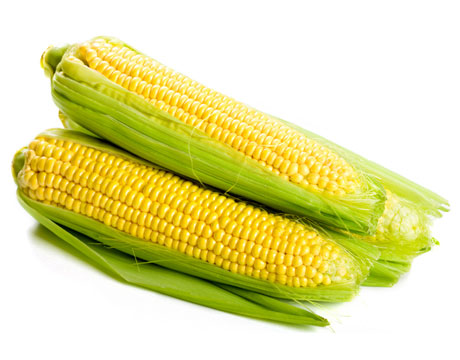
Corn

There are five principal classes of corn: dent or field corn, flint corn, pop or Indian corn, flour corn, and sweet corn. Dent is the predominant type
grown throughout the world. Sweet corn is the common “corn on the cob” that we eat today.
Archaeological studies indicate that corn was cultivated in the Americas at least 5,600 years ago. Corn, also known as maize, was domesticated
in Mesoamerica, which in pre-Columbian cultures included southern Mexico, Guatemala, Belize, El Salvador, western Honduras, and parts of
Nicaragua and Costa Rica. Corn spread to the rest of the world after Spaniards came to the Americas in the late fifteenth century and early
sixteenth century. Today, there are over six hundred food and nonfood products made from corn.


Where Is Corn Grown?

The United States is by far the largest producer of corn, accounting for forty percent of world production, followed by Canada, China, Brazil, and
many other nations. The “Corn Belt” includes the states of Iowa, Illinois, Nebraska, Minnesota, Indiana, Ohio, Wisconsin, South Dakota, Michigan,
Missouri, Kansas, and Kentucky, with the first four states accounting for over fifty percent of corn production in the United States. About seventy-five
percent of corn produced in the United States is fed to livestock.

Why Should I Eat Corn?

Corn is a good source of fiber, vitamin B1, folate, vitamin C, and pantothenic acid. Corn contains the phytochemicals beta-cryptoxanthin, lutein,
saponins, alkaloids, sitosterol, stigmasterol, malic acid, palmitic acid, tartaric acid, oxalic acid, and maizenic acid, which have heart health and
cancer-fighting properties.

Home Remedies

The entire corn plant has long been used in Native American cultures for medicinal purposes. Cornsilk is a well-studied tea that has diuretic
properties, and, accordingly, has been used for difficult, painful, or frequent urination. Cornmeal boiled with milk has been applied to burns,
inflammations, and swellings. Cornstarch, applied as a powder, may soothe chafing. Cornmeal mixed with castor or corn oil has been used to
relieve skin irritations. In Chinese traditional medicine, corn has been used for gall-stones, jaundice, hepatitis, and cirrhosis. The cobs stripped of
the fruit have been used to treat nosebleeds and unusual uterine bleeding. The hulls have been used to treat diarrhea in children.

Lifesaver!

HEART HEALTH: Corn is high in folate, a vitamin known to reduce homocysteine, an inflammatory marker attributed to heart disease.

LUNG CANCER: Corn is rich in beta-cryptoxanthin, an orange-red carotenoid that may significantly lower the risk of developing lung cancer.

One study evaluated the diet of 63,257 adults in Shanghai, China, finding that those who ate the most crytpoxanthin-rich foods had a twenty-seven
percent reduction in lung cancer risk. Smokers who ate the crytopoxanthin-rich foods were found to have a thirty-seven percent reduction in risk
compared to those who didn’t eat them.

COLON CANCER: Corn is very high in phenolic compounds that may help in preventing colon cancer and other digestive cancers. Corn is also

high in resistant starch that helps promote butyrate, a short-chain fatty acid found in the colon that may be beneficial in fighting colon cancer.

DIABETES: Cornstarch, a component of corn, was shown to improve glucose metabolism in normal and overweight women.

 Tips on Using Corn

SELECTION AND STORAGE:

• Corn kernels come fresh, frozen, canned, and canned creamed.
• Avoid ears of corn with shriveled husks that look burned or have a dark-colored slime in the tassel.
• Leave the husks on and place corn, uncovered, in the refrigerator. Use within a few days for best quality.

PREPARATION AND SERVING SUGGESTIONS:

• Fresh corn can be boiled, steamed, microwaved, or roasted on the grill or in the oven.
• Enjoy cold in salads.
• Use polenta (the Italian word for cornmeal) as a pizza crust for a healthy pizza.
• Use resistant cornstarch to replace up to twenty-five percent of flour to increase fiber content of your baked goods.

Coffee

Coffee comes from an evergreen tree that produces red coffee “cherries.” The process starts by removing the skin of the cherry to reveal a green
coffee “bean.” The coffee beans are then dried and roasted to make a brown bean.
Most coffee consumed comes from either arabica or robusta varieties of beans. Arabica coffee accounts for seventy percent of the world’s
coffee production. It has a mild flavor and is aromatic. Robusta coffee comes from Southeast Asia and Brazil. It has a somewhat bitter taste and
contains about fifty percent more caffeine than Arabica.
Coffee is thought to have originated in central Ethiopia in 850 A.D. and was brought to Yemen, where it has been cultivated since 1000 A.D. Coffee
was mainly used for medicinal purposes until around one thousand years ago, when people began drinking it as a hot beverage. Coffee was
always popular among Middle Eastern people but it took time for the beverage’s popularity to grow in Europe. Christians first thought that coffee
was evil until the Pope tried some and thought it was delicious and blessed it. This began the start of the coffeehouse culture, which soon spread
from Italy to France, England, and the Americas.

Where Is Coffee Grown?

Coffee is grown in over fifty-three countries worldwide. These countries have in common their southern latitude; they all lie along the equator
between the tropics of Cancer and Capricorn, otherwise known as the “Bean Belt.” Brazil is the largest producer of coffee, followed by Colombia,
Mexico, Guatemala, Costa Rica, Kenya, Indonesia, Yemen, and Vietnam. Hawaii and Puerto Rico also grow and produce coffee.

Why Should I Drink Coffee?

Did you know…moderate intake (three six-ounce cups per day) of coffee provides the same amount of hydration as an equal
amount of water? This is especially true for “seasoned” coffee drinkers.
Coffee doesn’t contain significant amounts of vitamins or minerals, yet its antioxidant properties are off the charts. It is one of the top antioxidant
beverages consumed worldwide. Coffee contains phytochemicals such as chlorogenic acids, with similar antioxidant benefits to those found in
fruits and vegetables that may improve glucose (sugar) metabolism. An average cup of regular coffee contains anywhere between 60 and 130 mg
of caffeine. Caffeine is a stimulant that can help with alertness and may improve athletic performance; however, too much can cause jitteriness and
irritability.

Home Remedies

Concoctions from the leaves and roots of the coffee tree have been used for fevers, colds, and pneumonia. Many people believe that administering
a coffee enema detoxifies the liver while cleaning the colon. Coffee does have a laxative effect on many people.

 Lifesaver!

PARKINSON’S DISEASE: In a study of over one million people, caffeine consumption was associated with a reduced risk of Parkinson’s

disease in men (but not in women).

HEART HEALTH: Though coffee consumption has been associated with hypertension and elevated homocysteine, one study that followed

41,836 postmenopausal women for fifteen years showed that coffee consumption reduced the risk of cardiovascular disease and other
inflammatory conditions.

LIVER PROTECTOR: In a study of more than 125,000 people, one cup of coffee per day cut the risk of alcoholic cirrhosis by twenty percent.

Four cups per day reduced the risk by eighty percent!

MEMORY LOSS: A study done on elderly men showed that those who drank three cups of coffee per day had less memory loss than those who

did not. In another study observing an elderly population, University of Arizona researchers found that decaffeinated-coffee drinkers had a decline in
memory performance as the day wore on but this was not the case with caffeinated coffee drinkers.

TYPE 2 DIABETES: An eleven-year study with women found that those who consumed coffee (especially decaffeinated) had less risk of

developing type 2 diabetes. A review of fifteen studies on coffee and type 2 diabetes, published in The Journal of the American Medical
Association, found that people who regularly drank coffee were at lower risk.

BREAST CANCER: Human breast cancer cells responded positively to a treatment with caffeic acid and chlorogenic acid from coffee.

Tips on Using Coffee

SELECTION AND STORAGE:

• To select the best-tasting coffee beans, make sure they are freshly roasted and ground. The beans should be fragrant and free of any cracks.
• The darker the roast, the stronger and more bitter the flavor.
• Troubled by stomach pain when drinking coffee? Phenols, not phenolic acids, may be responsible. Reduced-acid coffees are now available.
• Keep coffee in an airtight container in a cool, dry place. Refrigerate ground coffee for storage of longer than a week but don’t freeze coffee as it
causes moisture to accumulate and unwanted odors can be absorbed.

PREPARATION AND SERVING SUGGESTIONS:

• Grind coffee beans just before using. Finer grinds brew faster.
• For strong coffee, use two tablespoons of coffee for every six ounces of water.
• Using cold water will help maximize the flavor of the ground coffee beans.
• Run your coffee maker with a mixture of one part vinegar and one part water a few times each month. This eliminates buildup of oils that have
become oxidized and can produce a bitter taste in your coffee.
• Use strong black coffee as an ingredient in cakes and other desserts for extra flavor.
• Leftover coffee grinds can be used in a marinade for meats.